Conférenciers invités

Plate-Forme Intelligence Artificielle 2026 du 29 juin au 03 juillet à Arras, France

Conférences disponibles

06

Intervenants

18

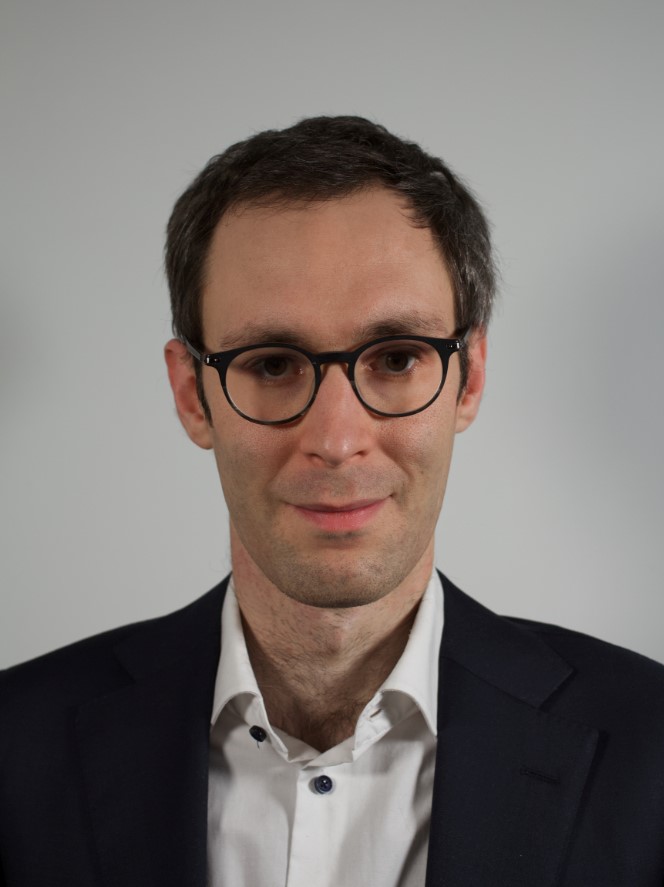
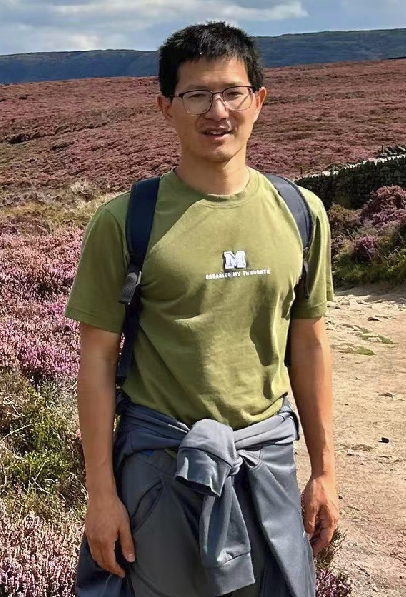
Jiaoyan Chen

Chen Jiaoyan

University of Manchester, UK
IC
Professeur

Exploring Large Language Models in Ontology Reasoning and Construction

Abstract:

Ontology is widely used for knowledge representation in many domains like biomedicine and e-commerce, but ontology construction is always challenging, relying on a lot of manual costs and expertise. Ontology reasoning can support ontology construction and its application, but classic symbolic methods suffer from problems like the failure to deal with uncertainty, incompleteness and informally represented data. Although machine learning and neural-symbolic integration have been widely explored, the emergence of Large Language Models, especially its emergent capabilities in natural language understanding and generation, have attracted many researchers’ attention for advancing ontology reasoning and construction. In this talk, I will focus on language model-based ontology representation learning for ontology reasoning and generative large language models (LLMs) for complex proofs in OWL ontology, and briefly introduce some other works on LLMs for ontology alignment and completion.

Bio:

Dr. Jiaoyan Chen is Senior Lecturer (~Associate Professor) in Department of Computer Science, The University of Manchester. Before joining The University of Manchester in 2022, he worked as a Senior Researcher in University of Oxford since 2017 and got his PhD in Computer Science and Technology in Zhejiang University. Jiaoyan’s research focuses on Knowledge Graph, Ontology, and Artificial Intelligence. His publications has got ~6000 citations according to Google Scholar, and his recent research on Ontology Embedding was awarded an EPSRC New Investigator Award. Home page: https://chenjiaoyan.github.io/.
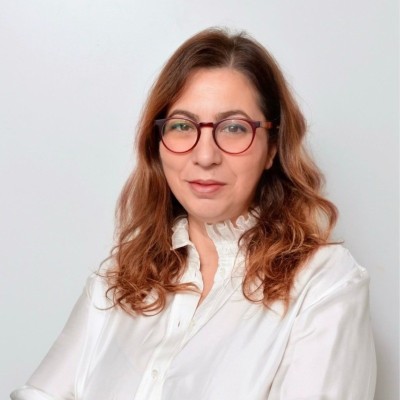
Solenne Gaucher

Gaucher Solenne

CREST/École polytechnique
 RJCIA
Maîtresse de conférences

About me

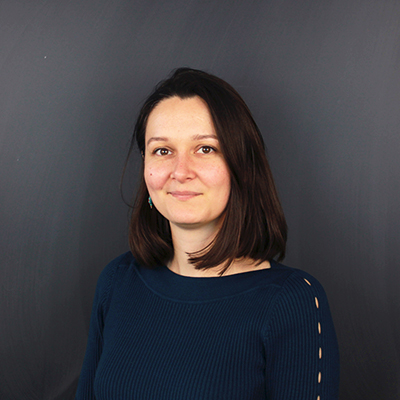
I am assistant professor at École polytechnique. Prior to that, I was a postdoc at ENSAE in the FairPlay team, under the supervision of Vianney Perchet. I received my PhD from Université Paris-Saclay, working in the Laboratoire de Mathématiques d’Orsay under the supervision of Christophe Giraud and Olga Klopp.

I am mainly interested in sequential learning and sequential decision-making problems, and in fair machine learning.

News

Our paper Supervised Contamination Detection, with Flow Cytometry Application has been accepted for publication at Biometrika !

I am thrilled to announce that I have been named one of the 2024 French Young Talents of the Fondation L’Oreal-UNESCO For Women in Science! I am incredibly honored to be sharing this award with 34 brilliant women.


Järvisalo Matti

Matti Järvisalo

University of Helsinki, Finland
 RDPIA 
Professeur

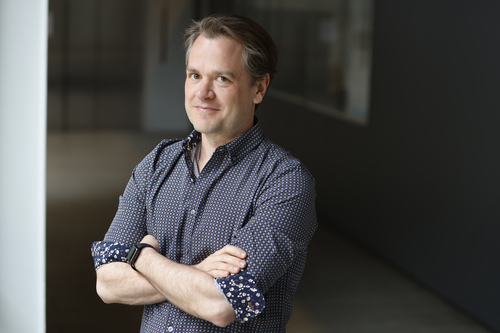
Matti Järvisalo is Professor of Computer Science (Algorithms and Machine Learning) at University of Helsinki, Finland, where he leads the Constraint Reasoning and Optimization group. His research interests span several areas in artificial intelligence, including automated reasoning and declarative programming, combinatorial optimization, knowledge representation and graphical models, with key contributions especially in theory and practice of Boolean satisfiability (SAT), SAT-based decision, combinatorial optimization and counting procedures, and their applications. His group has been successful in developing state-of-the-art solvers and tools e.g. for SAT, maximum satisfiability (MaxSAT), pseudo-Boolean optimization, formal argumentation, and answer set programming. With over 160 peer-reviewed publications to date, Dr. Järvisalo has received various best paper awards and other international recognitions for his contributions, including the IJCAI-JAIR Best Paper Award and an IJCAI Early Career Spotlight, as well as further best paper recognitions at ECAI, CP, KR, ICLP and PGM. In addition to organizing various workshops and conferences, he was PC Chair for SAT'13, IJCAI-PRICAI'20 Demo Track, KR'23 Applications and Systems Track, and KR'24 In the Wild Track, Chair of the Finnish AI Society (EurAI member society of Finland) 2019-2021, and has served on program committees of over 100 conferences. Today he serves on the editorial boards of Journal of Artificial Intelligence Research, Journal of Automated Reasoning, and Journal of Satisfiability, Boolean Modeling and Computation. Dr. Järvisalo has also been involved in organizing various automated reasoning competitions, including the renown SAT solver competitions and MaxSAT Evaluations for many years.


Ben amor Nahla

Nahla Ben amor

LARODEC, University of Tunis
 CNIA
Professeur

Biographie courte Nahla Ben Amor

Nahla Ben Amor est professeure en informatique de gestion à l’Institut Supérieur de Gestion de Tunis (Université de Tunis). Elle a dirigé le Laboratoire de Recherche Opérationnelle, de Décision et de Contrôle de Processus (LARODEC) de 2013 à 2025. Elle est membre associée de l’Institut de Recherche en Informatique de Toulouse (IRIT) et membre du conseil scientifique de la Maison des Sciences de l’Homme et de la Société de Toulouse (MSHS-T). Elle est également auditrice principale senior certifiée ISO/IEC 42001 (Systèmes de management de l’intelligence artificielle).

Ses travaux de recherche portent sur les modèles graphiques, le raisonnement et la décision sous incertitude, l’apprentissage automatique et, plus récemment, l’IA agentique et l’IA responsable, incluant les questions d’équité algorithmique et de gouvernance des systèmes intelligents. Elle a encadré une vingtaine de thèses de doctorat et publié plus de 100 articles dans des revues et conférences internationales. Elle participe aux comités de programme de conférences internationales majeures en intelligence artificielle, notamment l’International Joint Conference on Artificial Intelligence (IJCAI), Uncertainty in Artificial Intelligence (UAI) et l’European Conference on Artificial Intelligence (ECAI). Elle intervient également comme relectrice pour des revues internationales telles que Fuzzy Sets and Systems (FSS) et International Journal of Approximate Reasoning (IJAR).


Short Bio Nahla Ben Amor

Nahla Ben Amor is a full Professor of Computer Science at the Institut Supérieur de Gestion de Tunis (University of Tunis). She served as Director of the Operations Research, Decision and Process Control Laboratory (LARODEC) from 2013 to 2025. She is an Associate Researcher at the Institut de Recherche en Informatique de Toulouse (IRIT) and a member of the Scientific Council of the Maison des Sciences de l’Homme et de la Société de Toulouse (MSHS-T). She is also a certified ISO/IEC 42001 Senior Lead Auditor (Artificial Intelligence Management Systems).

Her research interests include graphical models, reasoning and decision-making under uncertainty, machine learning and, more recently, agentic AI and responsible AI, including issues related to algorithmic fairness and the governance of intelligent systems. She has supervised around twenty PhD theses and published over 100 papers in international journals and conferences. She serves on the program committees of major AI conferences, including the International Joint Conference on Artificial Intelligence (IJCAI), Uncertainty in Artificial Intelligence (UAI) and the European Conference on Artificial Intelligence (ECAI). She also acts as a reviewer for leading journals such as Fuzzy Sets and Systems (FSS) and the International Journal of Approximate Reasoning (IJAR).


JS

Simão Sichman Jaime

Universidade de São Paulo
JFSMA
Professeur

Jaime Simão Sichman is a Full Professor of the Computer Engineering and Digital Systems Department (PCS) of Escola Politécnica (EP) at the Universidade de São Paulo (USP), Brazil. He has obtained both his B.E. and M.E. degrees in Electrical Enginnering from USP. He was one of the first students to obtain an European label to his PhD degree in Computer Engineering, developed at the Institut National Polytechnique de Grenoble (INPG), France, since part of his research was carried out at the Istituto di Psicologia del CNR, Rome, Italy. More recently, he has spent an abbreviated post-doctoral period at the University of Utrecht, at the Netherlands. His main research focus is multi-agent systems, more particularly in subjects like social reasoning, organizational reasoning, multi-agent-based simulation, reputation and trust, and interoperability in agent systems. He is co-director of the Laboratório de Técnicas Inteligentes (LTI) at USP, where he also held the position of director of the Electronic Computing Center (CCE) from 2010 to 2013. He has advised/co-advised 12 PhD, 20 MsC, and several undergraduate students. He has published more than 215 papers in national and international conferences and journals. He is member of the editorial board of the Journal of Artificial Societies and Social Simulation (JASSS), the Knowledge Engineering Review (KER), the International Journal on Agent-Oriented Software Engineering (IJAOSE), Computational and Mathematical Organization Theory (CMOT) and Autonomous Agents and Multi-Agent Systems (JAAMAS). He has organized several national and international conferences and workshops; in particular he was the SBIA/IBERAMIA General Chair (2000), Program Co-Chair (2006), and AAMAS Tutorial Chair (2007), Program Co-Chair (2009), Local Chair (2017) and Worskhop Co-Chair (2020). He was the coordinator of the Artificial Intelligence Special Interest Group (CEIA) of the Brazilian Computer Society (SBC), and was also a member of the Society’s Council. He is a member of the Board of Directors of the International Foundation for Autonomous Agents and Multiagent Systems (IFAAMAS). He was indicated as a Distinguished Speaker of the Association of Computing Machinery (ACM) in 2012.


Lobry Sylvain

Sylvain Lobry

 LIPADE, Université Paris Cité
APIA
Maître de conférences

I am an assistant professor (Maître de conférences) in Computer Science. I do research at the SIP team of the LIPADE laboratory and teach at UFR de Mathématiques et Informatique in Université Paris Cité. Before, I was a postdoctoral researcher at Wageningen University & Research in the Laboratory of Geo-information Science and Remote Sensing. I obtained my PhD in image processing from Télécom Paris in 2017. This work was done in collaboration with CNES and was awarded the best PhD award from Fondation Mines-Télécom.

My research interests are in the areas of methodological developments in image processing with applications in particular to remote sensing imagery. This includes high-resolution optical images processing using deep learning techniques and change detection, classification and regularization on multi-temporal series of SAR images using Markov Random Fields models. During my PhD, I was working on the SWOT mission, dedicated to the study of the world’s oceans and its terrestrial surface waters. Since 2019, I also work on the interactions between remote sensing data and natural language. In particular, we introduced the task of Visual Question Answering for Remote Sensing (RSVQA).


Delemazure Théo

Théo Delemazure

ILLC, University of Amsterdam
Postdoc

Bulletins de vote expressifs pour les systèmes de vote et l’analyse politique

Abstract

Les systèmes de vote utilisés en pratique, tels que le scrutin uninominal majoritaire à deux tours ou les systèmes proportionnels avec seuils électoraux, ne parviennent souvent pas à saisir la complexité des préférences des électeurs. Ce manque d’expressivité des bulletins de vote est à l’orgine de défauts étudiés et documentés, comme la division des voix entre candidats similaires, et la non prise en compte des votes pour les partis n’atteignant pas les seuils électoraux, incitant les électeurs au vote stratégique (dit “vote utile”) et conduisant potentiellement à des résultats indésirables. Cette thèse soutient que des formats de préférences expressifs (tels que les bulletins d’approbation et les classements, avec ou sans égalités) peuvent atténuer significativement ces problèmes et potentiellement améliorer le processus démocratique, et qu’ils fournissent en outre des données pertinentes pour mener de nouvelles formes d’analyses descriptives du paysage politique. 

Bio

Théo Delemazure est chercheur post-doctorant à l’Institute for Logic, Language and Computation (ILLC) de l’Université d’Amsterdam. Avant de rejoindre cet institut, il a mené sa thèse intitulée « Bulletins de vote expressifs pour les systèmes de vote et l’analyse politique » au LAMSADE de l’Université Paris Dauphine, qu’il a défendue en juin 2025. Sa thèse a été dirigée par Jérôme Lang et Dominik Peters. À l’intersection de l’informatique, des mathématiques et de l’économie, les recherches de Théo Delemazure s’inscrivent dans le domaine du choix social computationnel et se concentrent principalement sur la théorie du vote et sur l’étude théorique et expérimentale de modes de scrutin alternatifs.